

Explore the evidence on walking, stairs, squats, and seated heel raises for blood sugar, with practical starting ideas and essential exercise precautions.
After dinner, the easiest place to go is often the sofa. A short walk or a break from sitting gives your muscles something useful to do while your body processes the meal.
Physical activity can help manage blood glucose. Working muscles can take up glucose through pathways that don’t depend entirely on insulin, and activity can improve insulin sensitivity. [1]
That makes everyday movement worth considering, especially if much of your day is spent seated. Walking, stairs, standing exercises, and seated calf movements each give you a different way to begin.
The research needs careful reading, though. A reduction reported during a laboratory experiment isn’t a promise that a particular movement will lower your own reading by the same percentage.
Exercise belongs alongside prescribed diabetes treatment. Keep using your medicines as directed, and ask your care team how activity fits your food, insulin, and monitoring plan.
A reading above 140 isn’t proof that your arteries are burning
A video may describe every glucose reading above 140 mg/dL as an immediate injury. That wording can create fear around a number that needs context.
Glucose targets depend on the person, the timing of the measurement, and the clinical situation. NIDDK describes a common target below 180 mg/dL about 2 hours after a meal begins for many people with diabetes, while noting that individual targets can differ. [2]
Long-term glucose management matters, but a single reading doesn’t reveal the condition of your arteries. Discuss repeated readings outside your agreed range rather than trying to exercise every rise away.
If you don’t have diabetes and are concerned about your glucose, ask whether standard testing is appropriate. Diabetes diagnosis uses established blood tests and clinical interpretation; a response to exercise doesn’t diagnose or rule out the condition. [3]
How muscles help handle glucose
During activity, muscle contractions help move glucose from the bloodstream into muscle cells. The body can then use that glucose to help meet the demands of movement. [1]
The size of the change varies. Food, medicines, the type of activity, and your starting glucose all affect what happens.
Harder exercise can sometimes raise glucose temporarily because the body releases hormones that increase available fuel. [4] Chasing a lower number by continually increasing intensity can therefore be counterproductive.
Choose an activity you can do comfortably and repeat. If you’re monitoring glucose as part of diabetes care, use the results to inform a discussion with your clinician rather than judging a workout by one reading.
1. A short walk after eating
Walking is a practical starting option for many people. You can choose a level route, adjust your pace, and stay close to home.
An indoor hallway can work when the weather is poor. At work, a short permitted break away from your desk may be easier than finding time for a separate outing.
What the walking study found
A 2025 trial studied 12 healthy young adults after a 75-gram glucose drink. They completed a 10-minute walk immediately afterward, a 30-minute walk starting 30 minutes later, or a seated comparison condition. [5]
The immediate walk produced an average glucose peak of about 164 mg/dL, compared with about 182 mg/dL during sitting. Both walking conditions improved overall 2-hour glucose measures compared with sitting, and the two walking conditions didn’t differ significantly in their peak glucose results.
Participants walked at a comfortable pace. The experiment supports further interest in short walks, but its small sample and glucose-drink protocol limit direct application to everyday meals or diabetes care.
It also gives no basis for declaring a later walk useless.
A manageable way to begin
If walking is suitable for you, choose one meal after which you usually have some free time. Try a short, comfortable walk and build toward 10 minutes if that feels manageable.
Clear an indoor route before starting. Outdoors, choose an even surface and footwear that feels secure.
You don’t have to hurry as though you’re late for an appointment. Start gently, especially if you’ve been inactive, and avoid pushing through dizziness, unusual breathlessness, or pain.
If immediate walking feels uncomfortable after eating, adjust the timing. Ask your care team about a suitable routine if symptoms or your treatment schedule make the choice difficult.
2. Stairs or supported step-ups
Stairs use the legs to lift your body weight and can feel demanding quickly. They may suit someone who already climbs stairs comfortably, but they require balance and a safe setting.
Choose a handrail and a low, secure step. A household chair or an unstable box is an unsuitable substitute.
What stair research can tell us
A 2024 randomized crossover study in apparently healthy young adults found improvements in post-meal glucose and insulin after brief stair-climbing and descending bouts. Benefits were reported even with a 1-minute bout, with some additional measures improving after 3 minutes. [6]
That shows that brief activity can have measurable effects under study conditions. It doesn’t establish one universal percentage reduction or make stairs the best choice for every reader.
Other small research in people with type 2 diabetes used repeated stair sessions at 60 and 120 minutes after meals. [7] Exercise timing has been studied in several ways; everyone doesn’t share a single narrow opportunity to benefit.
Make the setup safe first
Check that the step is dry, well lit, and free of clutter. Keep a hand on the rail and place your foot securely before transferring your weight.
Begin with only a few comfortable repetitions if the movement is already familiar. Pause to check your breathing and balance rather than treating 3 uninterrupted minutes as a requirement.
If you have painful knees, foot problems, numbness, dizziness, or a history of falls, ask for help choosing an alternative. A level walk or an individually adapted seated activity may be a better place to start.
Plan where you’ll rest, too. A useful routine should be easy to stop safely when you’ve had enough.
3. Squats or sit-to-stand breaks
Standing up from a chair uses muscles in the hips and thighs. For many people, a controlled sit-to-stand is a familiar way to interrupt a long spell of sitting.
You can place a sturdy chair near your desk or use a suitable dining chair. Avoid wheels, unstable seats, and anything that slides across the floor.
What the sitting-break study actually tested
A 2024 crossover study involved 18 young men with overweight or obesity. Researchers compared prolonged sitting with one 30-minute walk and with repeated 3-minute walking or squatting breaks every 45 minutes. [8]
Both repeated-break conditions improved the measured glucose response more than the single walk in that experiment. The study supports breaking up sitting, with important limits from its size, participants, and short observation period.
It doesn’t justify promising that 10 quick squats will produce a fixed 21% drop in everyone’s blood sugar. The full activity schedule and the outcome measured matter when interpreting a headline.
Try a controlled chair movement
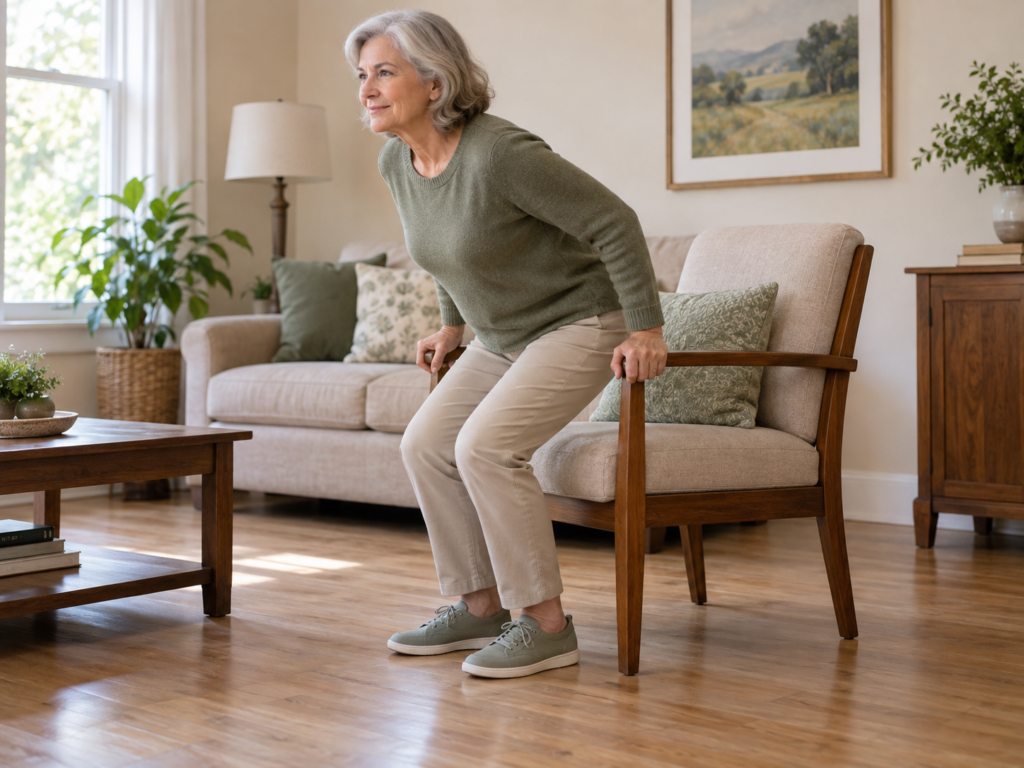
Start seated with your feet on the floor. Move toward the front of a sturdy chair, lean forward slightly, and stand using a comfortable amount of support.
Pause upright, then lower yourself back onto the seat with control. NHS strength guidance recommends building repetitions gradually. [9]
A few repetitions may be enough to learn the movement. Use the chair arms if needed and ask a physiotherapist for an adjustment if standing is difficult.
There’s no need to force a deep squat or make your thighs parallel to the floor. Choose a range you can control without pain, and keep breathing rather than holding your breath.
Fit breaks into ordinary transitions
Use the end of a work task, a television episode, or a scheduled break as a reminder to move. Pick a cue that already happens during your day.
If you prefer walking breaks, use those instead. Record which option is practical, especially if one causes discomfort or interrupts work more than expected.
The plan can change across the day. You might walk in the morning and do a few supported chair rises during an afternoon break.
4. Seated heel raises and the soleus research
Seated calf movements are appealing when standing is difficult or a seated break is more convenient. The soleus, a muscle deep in the calf, has been the focus of research on sustained muscle activity while sitting.
This work is interesting, but the technique and duration need attention before drawing conclusions from its most widely shared percentage.
What the 52% finding means
The original soleus research reported up to about a 52% reduction in the glucose excursion after a glucose drink during a prolonged experimental protocol. The university’s account describes a 3-hour observation period and a specifically trained movement. [10]
A glucose excursion is the rise above the starting level over time. A smaller excursion doesn’t mean a person’s actual glucose concentration was cut in half.
The researchers also described the importance of technique and laboratory assistance. Ten minutes of casual heel tapping at home hasn’t been established as equivalent to that protocol.
A gentle seated movement option
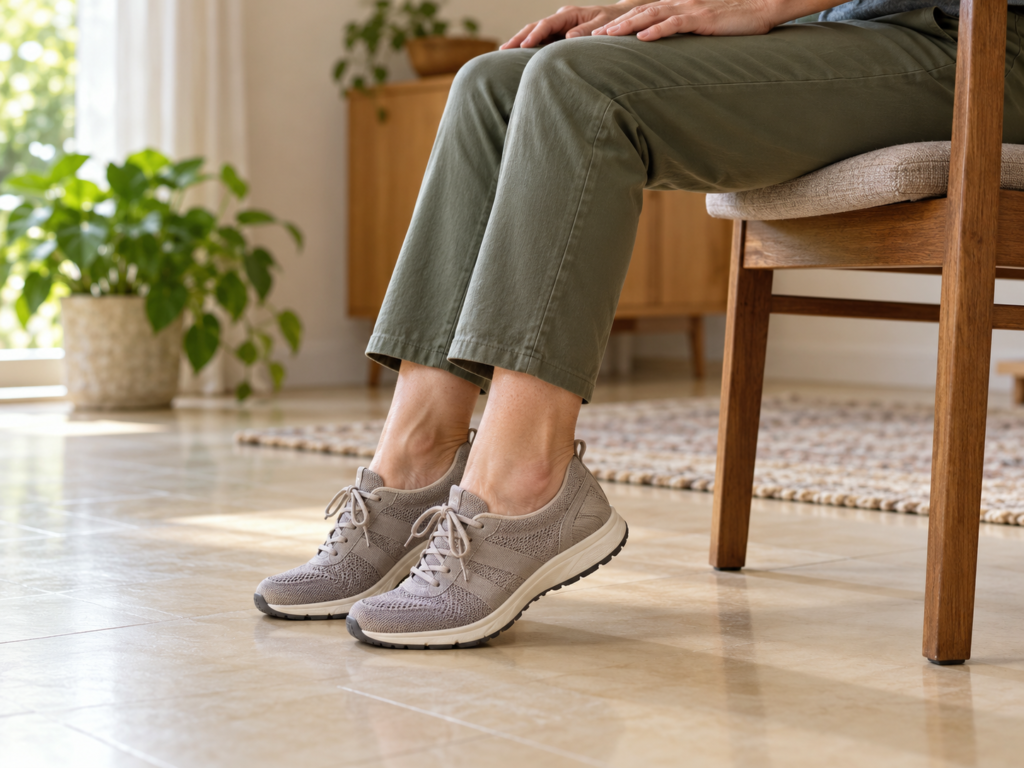
For a general seated heel raise, sit upright in a stable chair with both feet on the floor. Keep the front of each foot in contact with the floor as you lift your heels, then lower them comfortably. NHS chair-exercise guidance describes this type of movement for the lower legs. [11]
Use a comfortable range and stop if it hurts or causes cramping. Start with a small amount rather than trying to repeat the movement for hours.
This is a general movement suggestion, not a claim that you’ve reproduced the research method. A physiotherapist can help if ankle stiffness, weakness, or another condition limits your movement.
Never do heel-raise exercises while driving. Your feet need to be ready to operate the pedals, and your attention belongs on the road. Wait until you’re safely parked and away from driving duties.
Choosing an option that fits you
You don’t need to perform all four movements after every meal. Start with one that suits your ability, space, and routine.
| Your situation | A possible starting option | What to consider |
|---|---|---|
| You walk comfortably | A short walk on a level route | Footwear, lighting, and how you feel |
| You already manage stairs easily | A few supported step-ups | Handrail, balance, and step stability |
| You sit for long periods | A walking or sit-to-stand break | A clear route or sturdy chair |
| Standing is difficult | Individually suitable seated movements | Comfort and any rehabilitation advice |
These choices are ways to organize activity. They aren’t interchangeable treatments with guaranteed glucose effects.
Write down your first choice and the place you’ll do it. That small decision can make the next attempt easier than deciding from scratch after a meal.
Check medication-related risks before changing activity
People who use insulin or medicines that stimulate insulin release can develop low blood sugar during or after activity. Effects may persist beyond the exercise session. [1]
Ask your diabetes team when to check glucose, whether you need to carry fast-acting carbohydrate, and how to follow your existing exercise plan. Don’t change insulin doses on your own because a movement worked for someone online.
If your glucose is below 70 mg/dL, treat the low rather than exercising. For an awake person who can swallow, NIDDK advises 15 to 20 grams of fast-acting carbohydrate, followed by a recheck after 15 minutes and further treatment if still low. [12]
Follow your personal plan if it differs. Severe symptoms, unconsciousness, or inability to swallow require emergency help; never give food or drink to an unconscious person.
High glucose also needs context
Very high glucose can sometimes signal insufficient insulin or illness. People with type 1 diabetes, in particular, need a plan for checking ketones and managing high readings. [13]
Avoid exercise when ketones are elevated and follow your care team’s instructions. Trying to force glucose down with activity can worsen the situation when insulin is insufficient.
Vomiting, abdominal pain, deep or rapid breathing, or marked drowsiness with high glucose need urgent medical attention. Exercise isn’t an emergency treatment for those symptoms.
For a routine reading above your target, follow the response plan you’ve agreed with your clinician. The appropriate next step may involve checking again, reviewing food or medicines, or getting advice.
Make a small weekly plan
Choose one meal that reliably happens at home. For the first few days, leave a little time afterward for your chosen activity.
Put walking shoes somewhere convenient or clear a short indoor route. If you’re using a chair, check its position before you sit down to work.
Try a reminder during a long seated period. If the alert comes at a bad time, connect the break to the next natural pause rather than abandoning the whole day.
At the end of the week, ask what made the routine easier and what got in the way. You might need a shorter route, a different chair, a companion, or a better time.
If glucose monitoring is already part of your care, record activity alongside the meal and medicine information your team requests. Avoid changing several things at once and then assuming a single movement caused every difference.
Short breaks can support a broader activity routine
General adult guidance recommends at least 150 minutes of moderate aerobic activity each week and muscle-strengthening activity on at least 2 days. Activity can be divided into smaller sessions and adapted to your abilities. [14]
Short after-meal walks can contribute to that routine. Strength, balance, and other enjoyable movement may need their own place in the week.
A person with limited mobility can work toward an adapted plan. Ask a clinician or physiotherapist what types and amounts of activity suit your circumstances. [15]
Keep a list of things you’d like to do more comfortably, such as walking to a nearby shop or rising from a chair. Those goals give the routine a purpose beyond a number on a glucose display.
What to ask at your next appointment
Bring your questions and describe the activity you want to try. Mention falls, foot problems, chest symptoms, dizziness, and any medicine that affects glucose.
Ask what readings should make you pause, how to handle a low, and whether your current monitoring schedule needs adjustment. If a movement is uncomfortable, ask for a specific alternative.
Choose tomorrow’s starting point before you leave the conversation: a short walk, a supported chair movement, or an adapted seated exercise. Give it a safe place in your day and a realistic chance to become a habit.
Sources
Original material: User-supplied transcript; original video URL and channel details were not supplied.
- American Diabetes Association: Blood glucose and exercise
- NIDDK: Managing diabetes
- NIDDK: Diabetes tests and diagnosis
- American Diabetes Association: Why exercise sometimes raises glucose
- Hashimoto et al., 2025: A 10-minute walk immediately after glucose intake
- Moore et al., 2024: Brief stair climbing after a mixed meal
- Honda et al., 2017: Repeated 3-minute stair exercise in type 2 diabetes
- Gao et al., 2024: Interrupted sitting and glycemic control
- NHS: Strength exercises
- University of Houston: Original soleus research and technique; Hamilton et al., 2022: Original paper
- North Tees and Hartlepool NHS: Chair exercises
- NIDDK: Low blood glucose
- American Diabetes Association: Exercise and type 1 diabetes; Managing ketones
- CDC: Adult physical activity guidance
- CDC: Physical activity with chronic conditions and disabilities







Leave a comment