
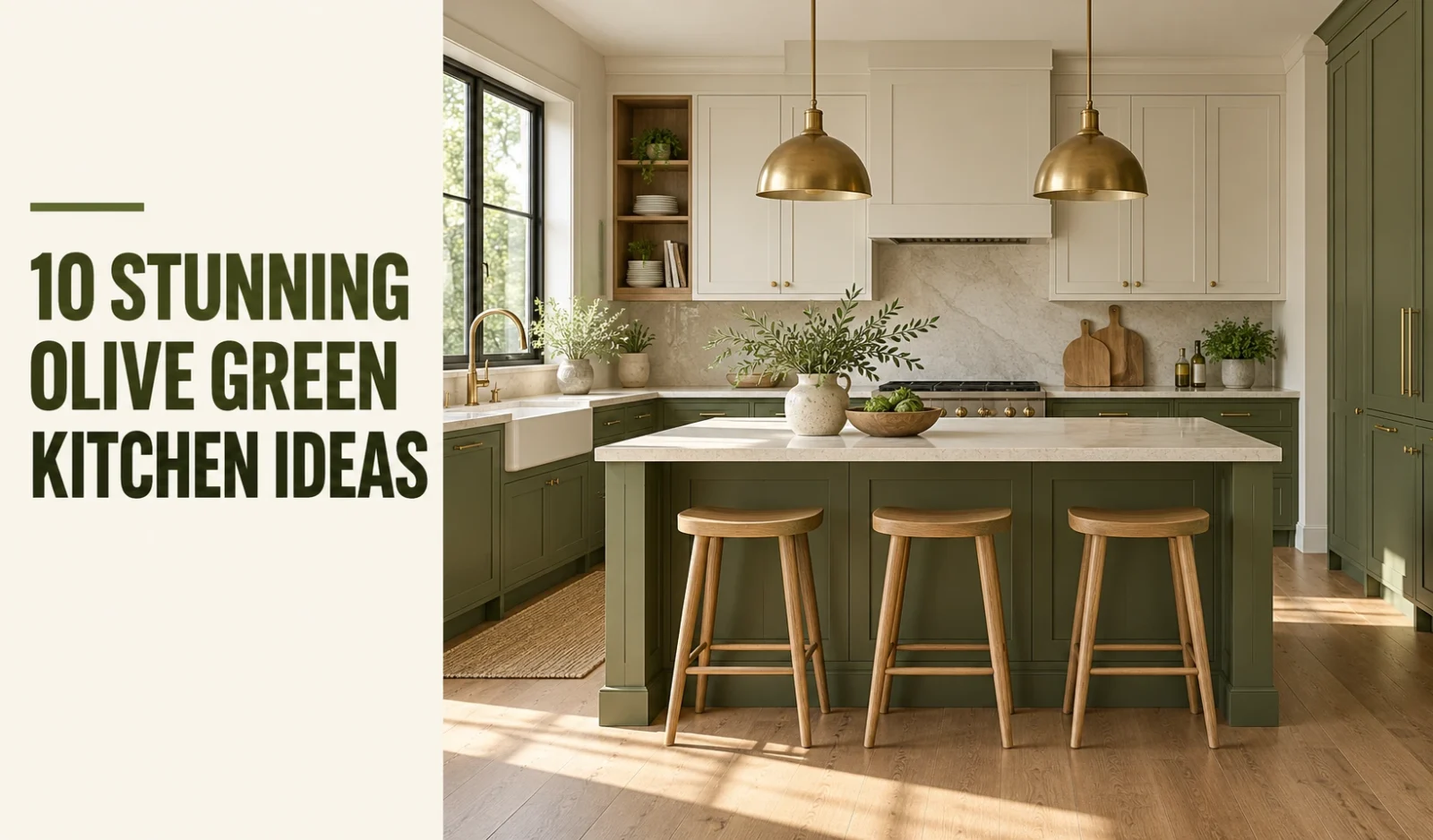
An olive green kitchen feels warm before you’ve added a single accessory. Against wood, the color looks earthy. Beside white cabinets and pale stone, it feels brighter and a little more polished.
Your 10 inspiration photos show how much the surrounding details matter. There are roomy islands, a neatly arranged pantry, dark countertops, and a small corner kitchen that makes good use of its walls.
I’d start by choosing the detail you love most. Maybe it’s the wooden countertop. Maybe it’s the green tile behind a shelf of plants. Build your palette around that one choice, then check paint samples beside the finishes you’ll keep.
1. Olive green cabinets with glowing glass-front cupboards
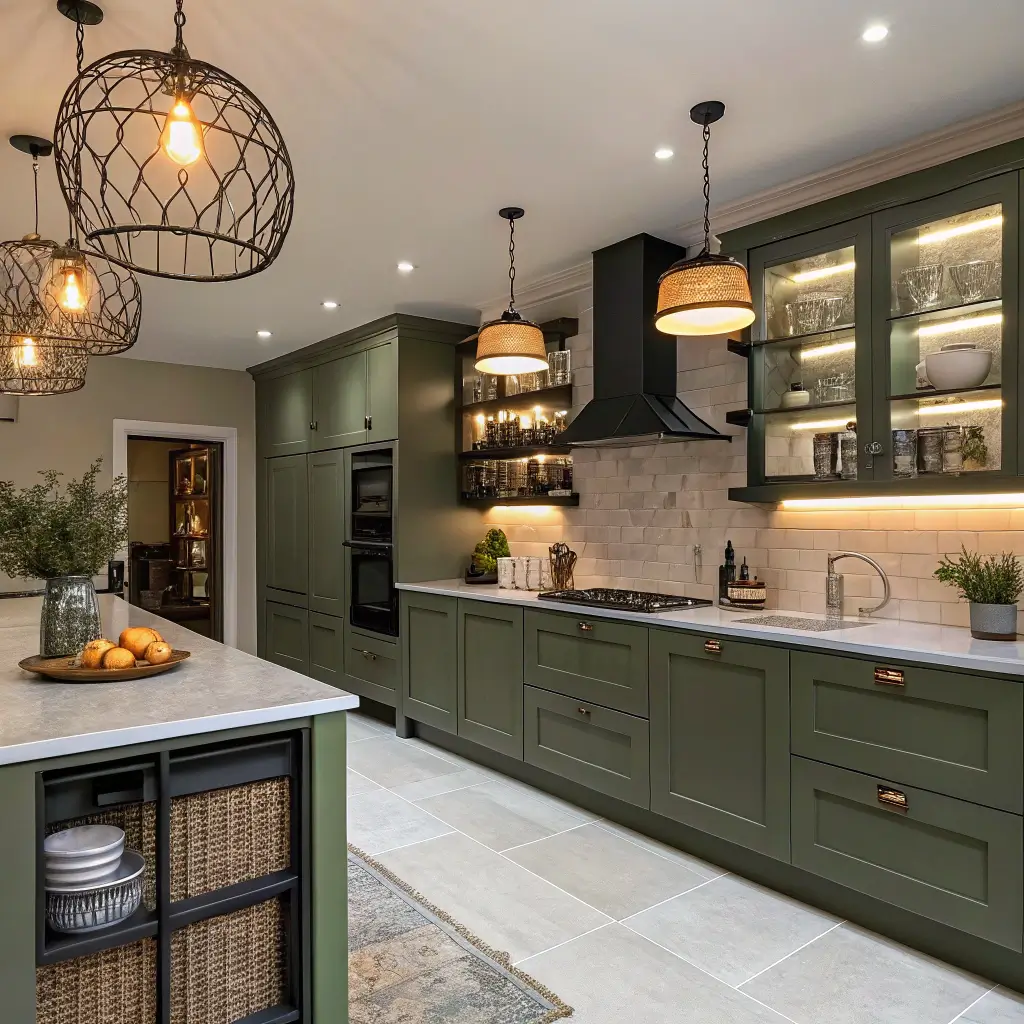
To borrow this idea, choose a small section of glazed cabinetry near your main counter. Fill it with pieces you reach for regularly, leaving a little space between stacks.
Keep the light gentle. The aim is a soft glow around the dishes, with separate task lighting where you prepare food. Compare the lighting against your cabinet sample so the green still looks right after sunset.
2. Wood countertops that warm up a galley kitchen
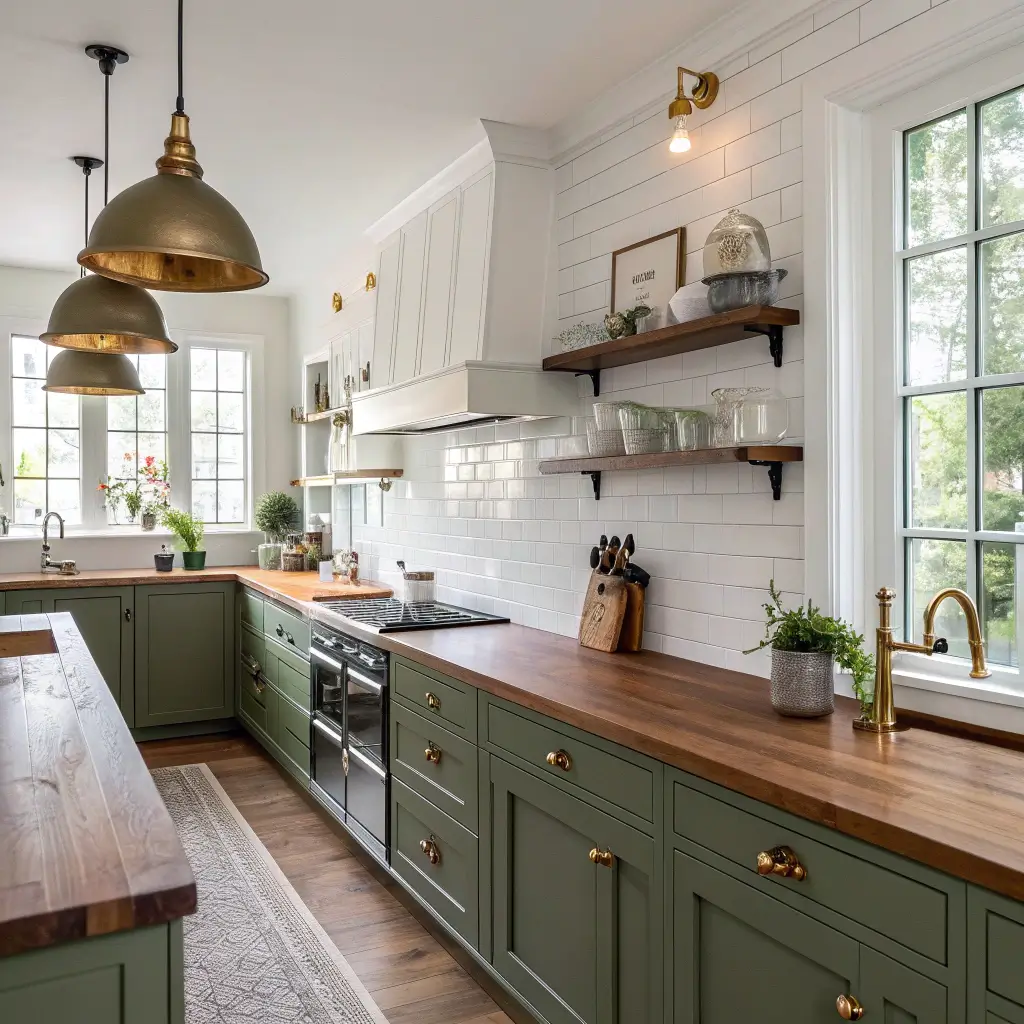
This is a lovely direction if you want a kitchen that feels relaxed. Keep the countertop styling modest: a utensil pot and a chopping board already bring plenty of texture.
If you’re considering real wood, check the product’s care instructions before committing, especially around the sink. Ask about the finish and upkeep. A countertop sample beside your green door sample will also help you judge whether the wood is too orange for the palette you want.
3. Flat-front olive cabinets with pale marble-look surfaces
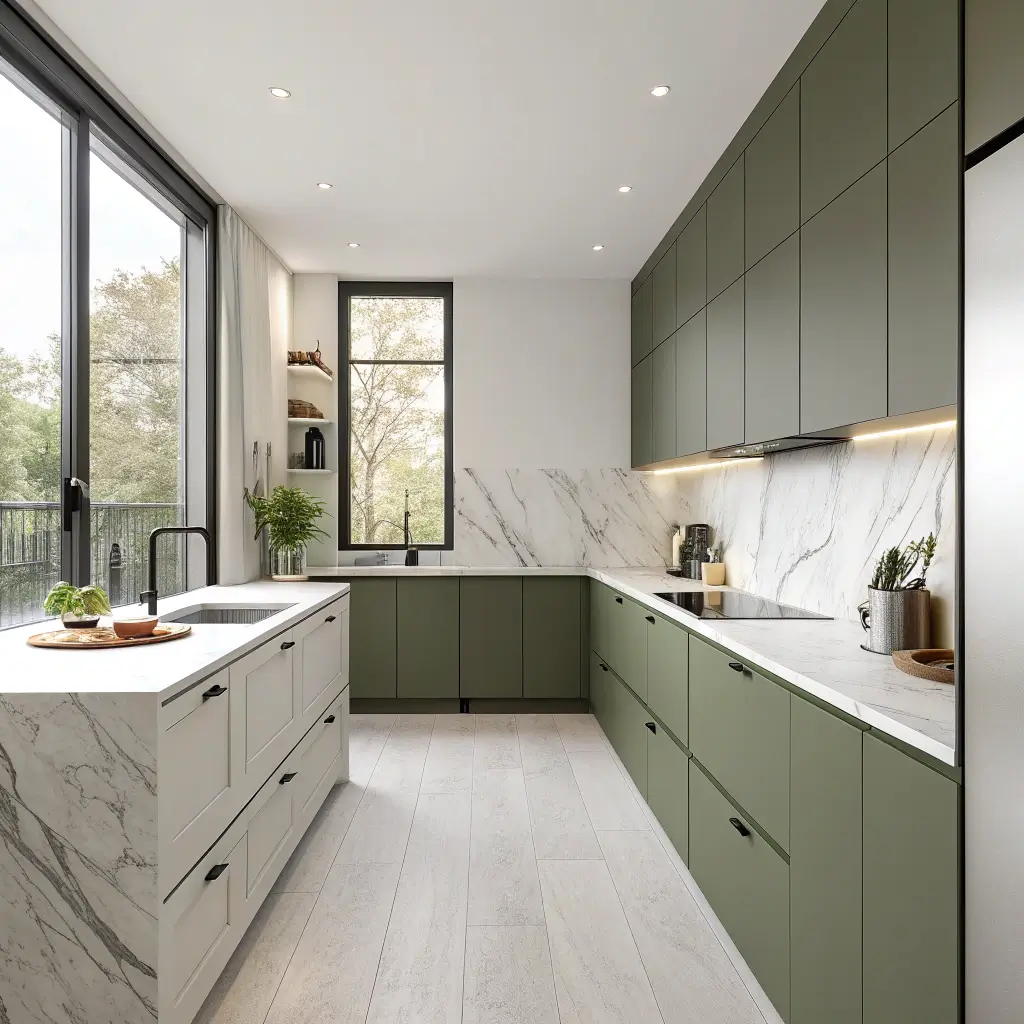
You can’t confirm a countertop material from a photo alone. When shopping for a similar look, compare actual samples and ask about the care each material needs.
I’d keep accessories sparse with this design. A bowl near the window and a small utensil holder give the space a lived-in touch. Choose a slab pattern you enjoy across a large area, because the waterfall edge makes that pattern a major part of the room.
4. A farmhouse kitchen with exposed beams
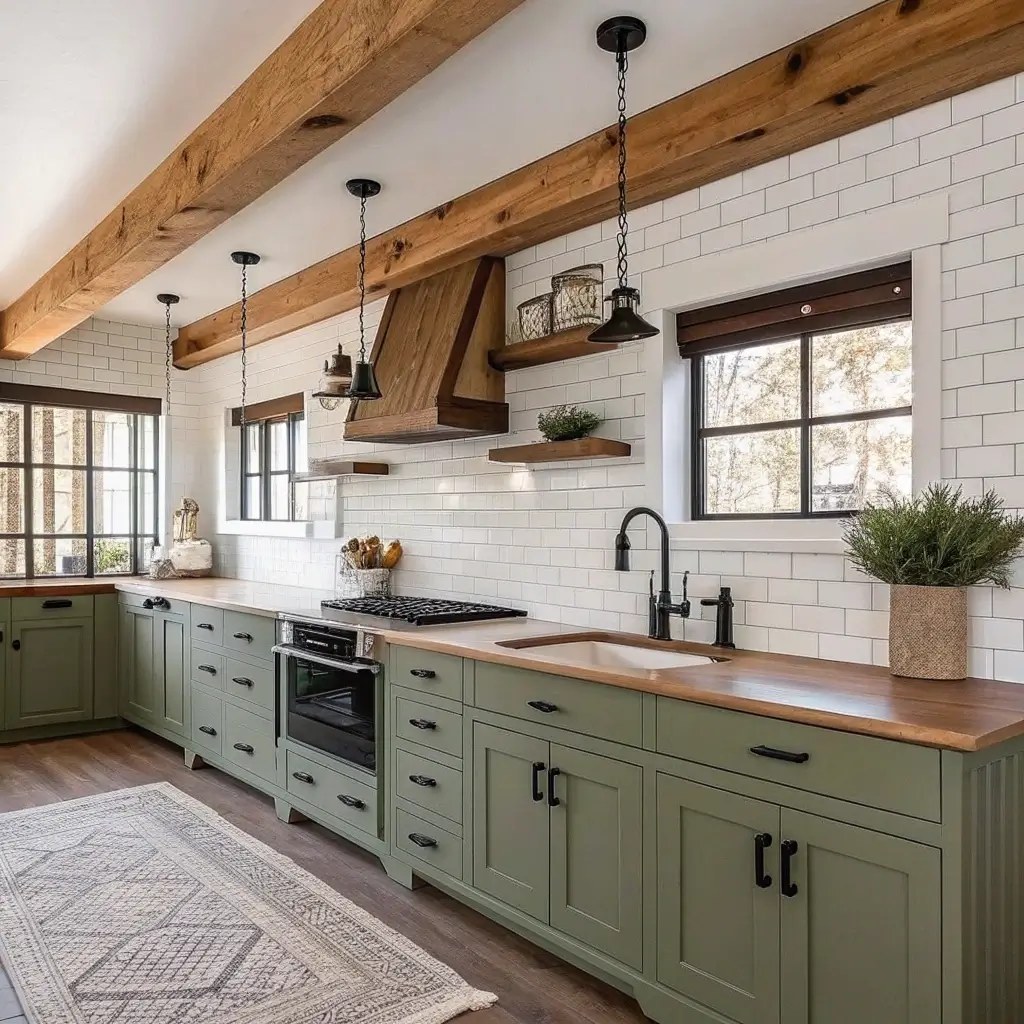
If your home already has beams, brick, or older wooden trim, use those details to guide your cabinet color. Hold several olive samples against the wood and see which shade makes the whole palette feel comfortable.
You can borrow the same feeling through smaller choices, too. Try simple dark hardware, a warm wood shelf, and a muted washable runner. Leave enough clear countertop beside the cooking area so the room works as comfortably as it looks.
5. An olive green pantry with a wood-lined interior
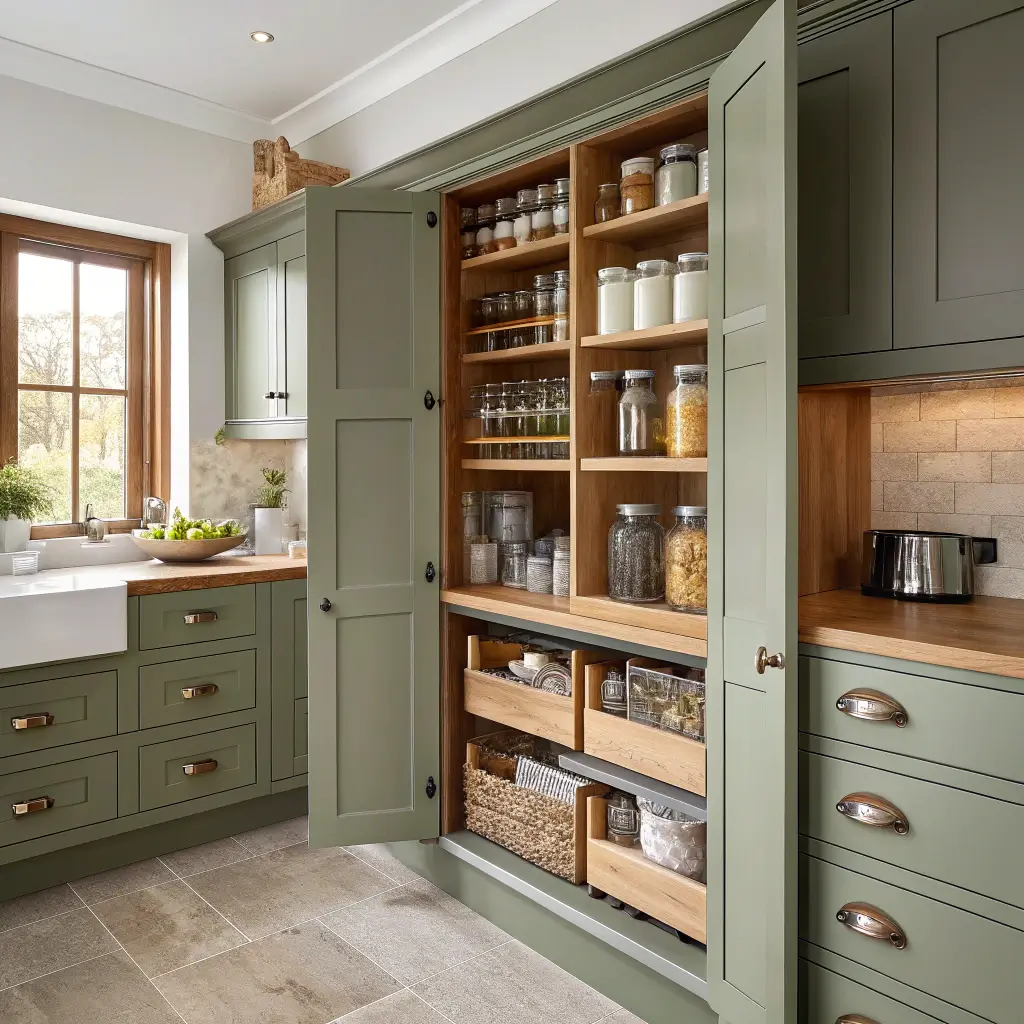
Start by planning around what you actually store. Tall cereal containers need different shelf spacing from spice jars, and heavy items are easier to manage when they’re within comfortable reach.
I’d keep everyday ingredients around eye and waist level, then use baskets for awkward packets. Leave a little spare room. A pantry that only works when every jar is perfectly placed becomes annoying by the second grocery trip.
6. Olive lower cabinets with warm white uppers
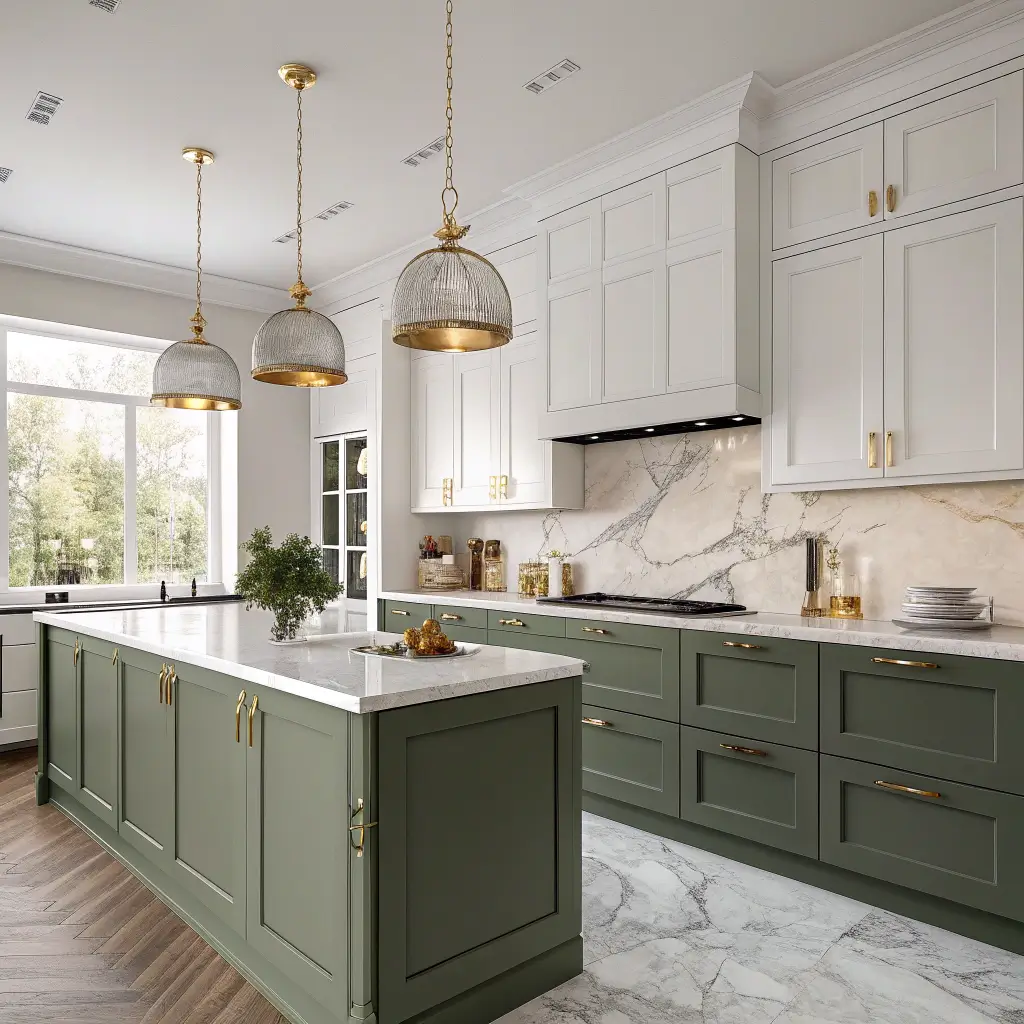
For a similar olive green and white kitchen, compare your white paint with the countertop first. Some whites look creamy; others read cooler. Place the samples together in your own room before ordering.
Use matching hardware across the green and white doors to keep the cabinetry feeling connected. You can then bring in warmth through the floor, wooden boards, or a small arrangement on the island.
7. A small olive kitchen with open wooden shelves
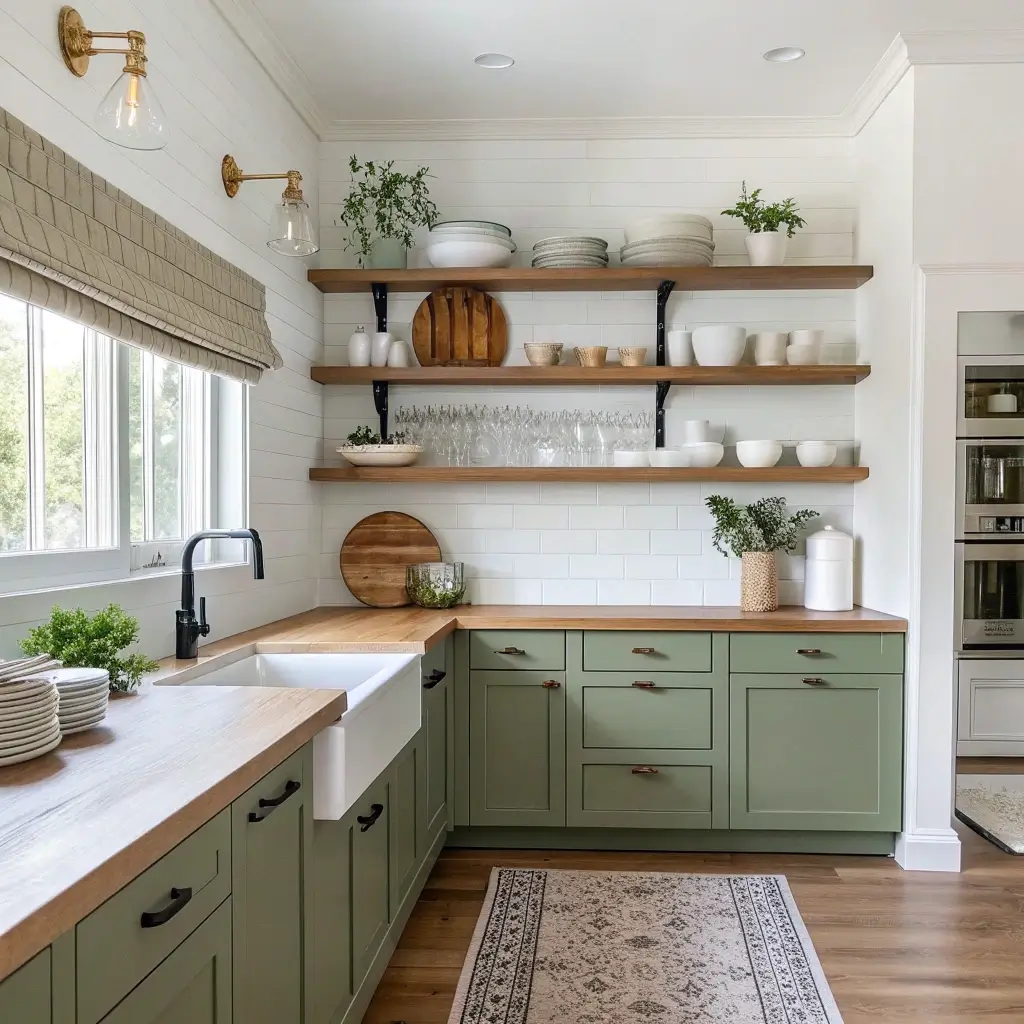
Choose open storage for things you’re happy to see every day. A mismatched collection can look charming, but you’ll want room to lift out a plate without moving half the shelf.
I’d keep less attractive supplies behind the lower doors. A fabric blind and a narrow runner soften the room, and a few small plants pick up the green. Keep shelves away from areas where cooking splashes would make cleaning a chore.
8. White cabinets against an olive herringbone backsplash
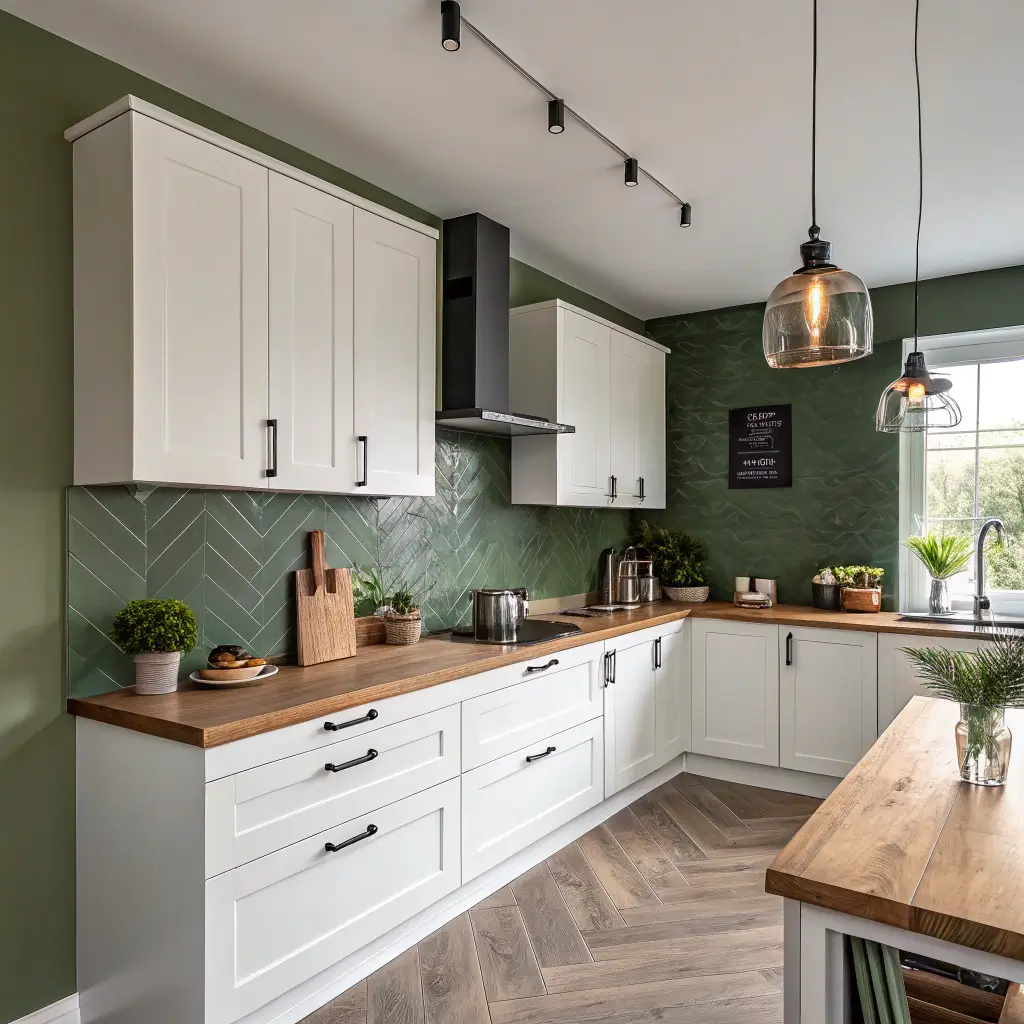
This is a useful olive green kitchen idea when you already like your cabinet color. A green backsplash can change the palette without repainting every door.
Before choosing tile, lay out several pieces with a grout sample. The grout changes how strongly you see the pattern. A close color match keeps the zigzag quieter; a stronger contrast makes every tile edge stand out.
9. Green subway tile with dark countertops
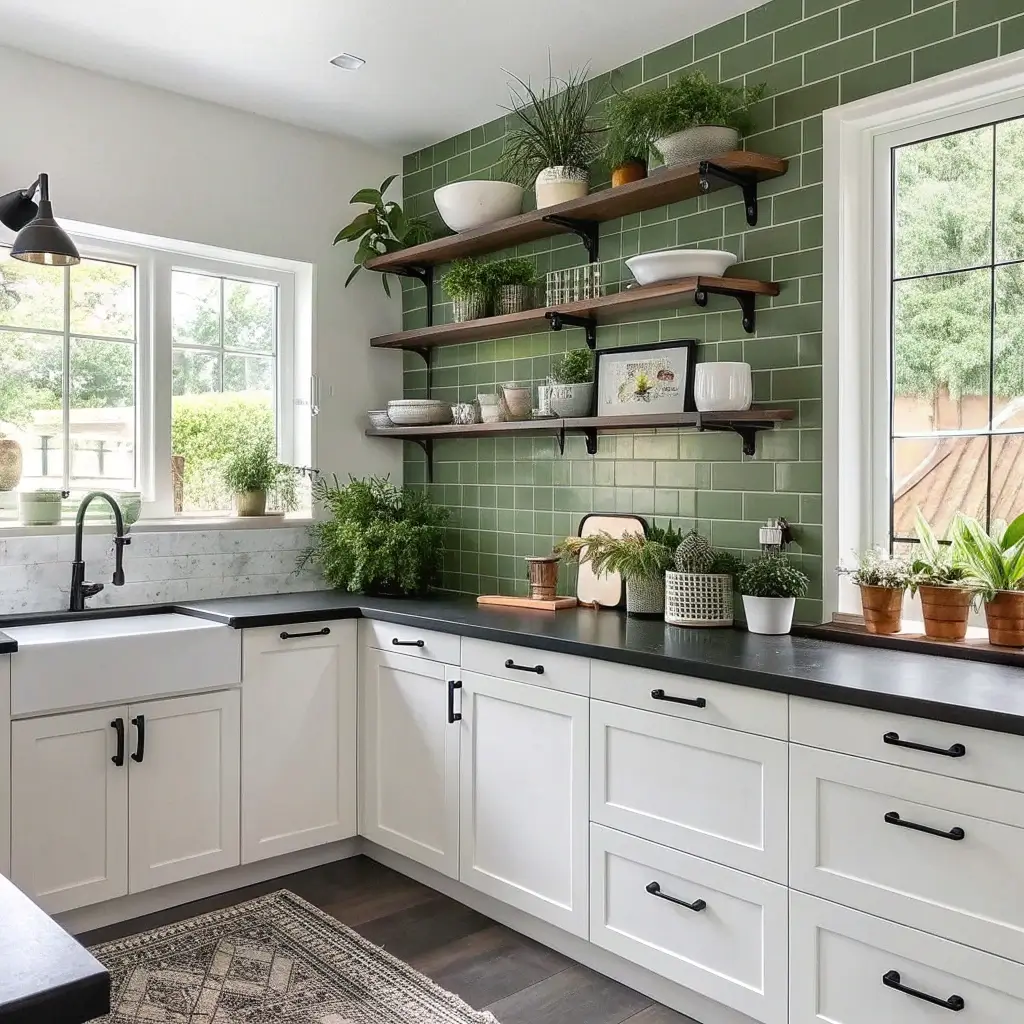
I like this approach when you want the wall to be the main feature. Keep nearby finishes fairly quiet so you can enjoy the tile’s color and surface.
Check a tile sample in daylight and under your kitchen lights. Gloss and slight color variations can look different across a full wall. Plan shelf positions carefully, too, so the arrangement leaves practical space around the sink and window.
10. A large olive green island with family seating
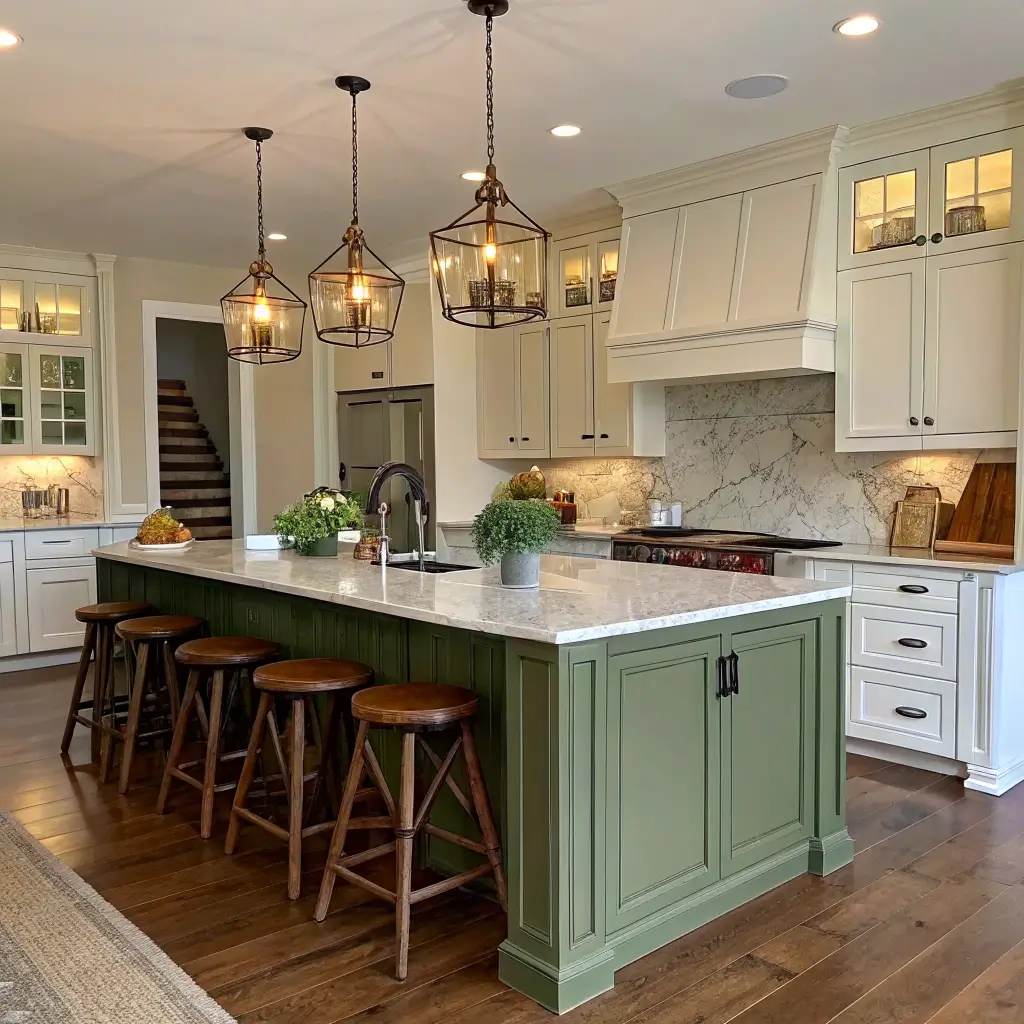
For your own layout, decide how you’ll use the island before choosing its size. Breakfast, food preparation, and homework each need clear space. Measure the surrounding walkways with stools pulled out as well as tucked in.
Then choose the green. An island gives you one clear place to use a deeper shade, especially when the surrounding cupboards are pale. Repeat a little of that color elsewhere, perhaps in a plant pot or serving bowl, and let the island hold the room’s attention.
Find your starting point
Choose the photo that fits how you use your kitchen. A pantry may matter most if storage is tight. Open shelves might suit your favorite everyday dishes, while a green backsplash gives white cabinetry a fresh setting.
Bring home your green sample before making the next choice. Place it beside the floor, countertop, and hardware, then look again in the evening. That small pause is a good way to choose a color you’ll enjoy over your first coffee and your last wash-up.







Leave a comment