


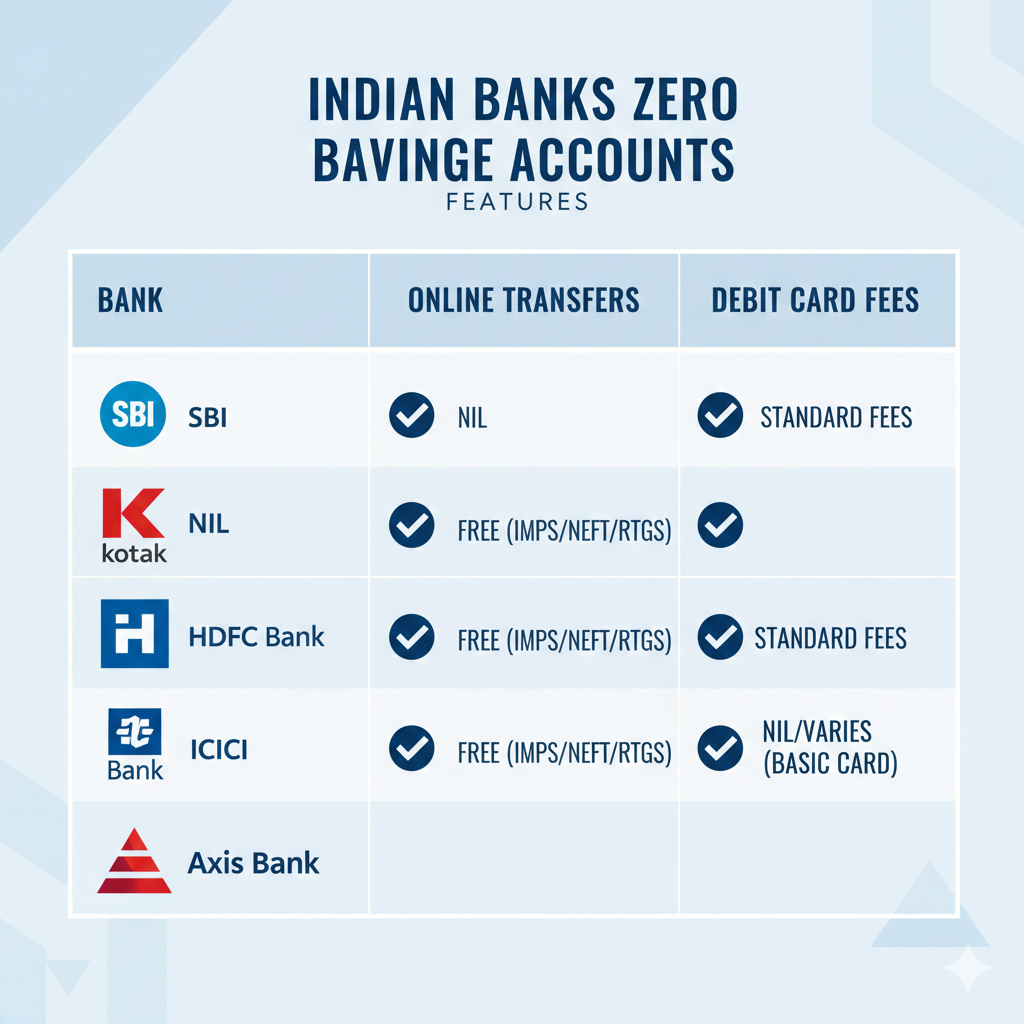


In today’s digital banking era, maintaining a minimum monthly balance in your savings account can be a significant burden, especially for students, young professionals, and small business owners. A zero balance savings account eliminates this worry entirely, allowing you to maintain ₹0 in your account without facing penalty charges
Whether you’re looking to open your first bank account or switch to a more customer-friendly banking option, understanding which bank offers the best zero balance savings account is crucial for making an informed decision. This comprehensive guide compares both private and government banks to help you choose the perfect banking partner for your financial needs.
What is a Zero Balance Savings Account?
A zero balance savings account is a type of bank account that requires no minimum balance to be maintained. Unlike traditional savings accounts that mandate a Monthly Average Balance (MAB) ranging from ₹2,500 to ₹10,000 or more, zero balance accounts offer complete freedom from this requirement.
Key Benefits of Zero Balance Accounts:
- No Penalty Charges: No fees for maintaining low or zero balance
- Financial Flexibility: Perfect for irregular income or students
- Digital Banking: Most offer robust mobile banking apps
- No Hidden Charges: Transparent fee structure
- Financial Inclusion: Makes banking accessible to everyone

Private Banks: Zero Balance Account Options
1. HDFC Bank: No True Zero Balance Option
Despite popular misconceptions, HDFC Bank does not offer a genuine zero balance savings account. Their Regular Savings Account requires a Monthly Average Balance of ₹10,000 in metro and urban areas.
Key Points:
- Regular Savings Account: ₹10,000 MAB required
- BSBD (Basic Savings Bank Deposit) Account: Available but has limitations
- Best for: Business current accounts and high-net-worth individuals
- Service quality: Excellent for those who can maintain balance
Verdict: Not recommended for zero balance requirements
2. Axis Bank: Limited Zero Balance Options
Axis Bank offers two main savings account variants:
Easy Axis Savings Account:
- Requires ₹12,000 Monthly Average Balance
- Good features but high MAB requirement
Axis Amaze Savings Account:
- Technically zero balance
- BUT: Charges ₹200 monthly fee (₹2,400 annually)
- Not cost-effective for genuine zero balance needs
Verdict: Avoid if you’re looking for true zero balance banking
3. ICICI Bank: Elite Customer Focus
ICICI Bank has adopted a strategy targeting high-value customers with substantial balance.
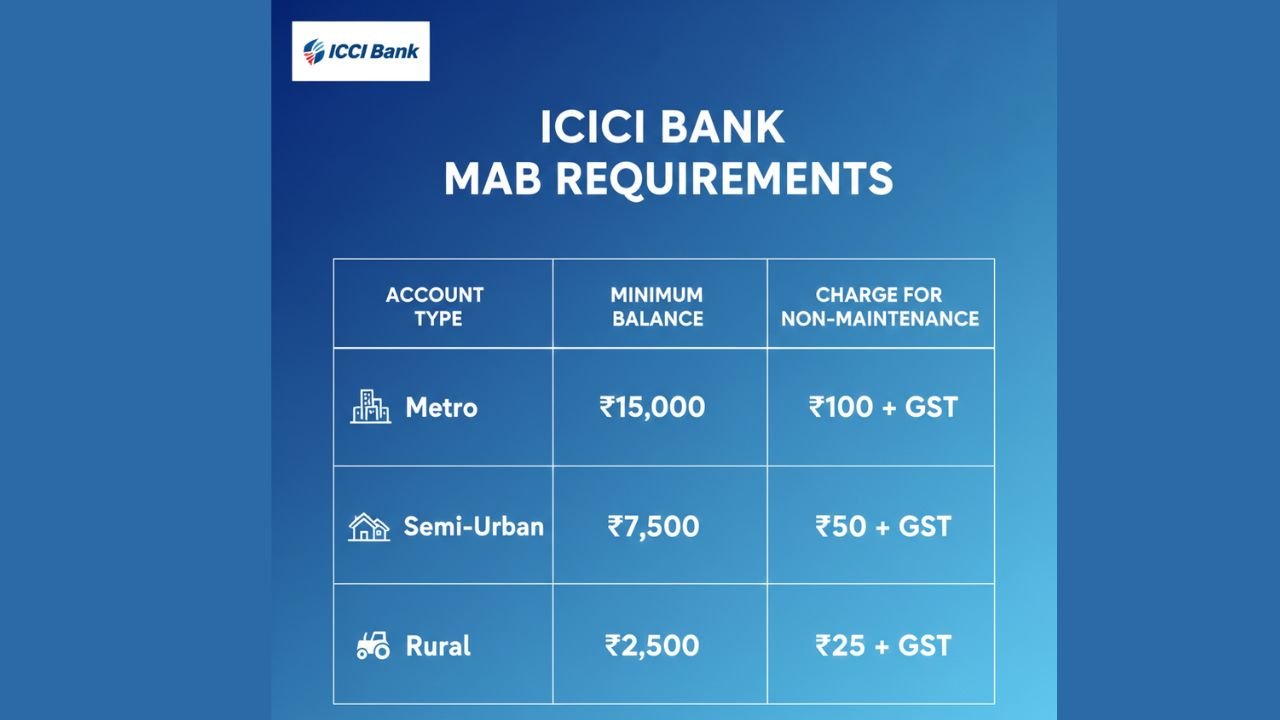
MAB Requirements:
- Metro Cities: ₹15,000
- Semi-Urban Areas: ₹7,500
- Rural Areas: ₹2,500
Initial Funding:
- Large branches may require ₹1 lakh initial deposit
- Smaller branches: ₹10,000 initial funding
Best For:
- Salaried individuals earning ₹1-2 lakh/month
- Business owners needing current accounts
- Customers who value premium banking services
Verdict: Excellent bank, but not suitable for zero balance or low-income individuals
4. AU Small Finance Bank: True Zero Balance
AU Small Finance Bank offers a genuine zero balance account with some considerations.
AU Digital Savings Account:
- Zero balance requirement ✓
- Initial Funding: ₹5,000-₹10,000 (one-time)
- After initial funding: Maintain zero balance
- DICGC insured ✓
- Higher interest rates on FDs
Important Considerations:
- Small Finance Bank (trust factor for some customers)
- RBI regulated and insured
- 11 Small Finance Banks operate in India
- Good for tech-savvy users
Verdict: Good option if you’re comfortable with Small Finance Banks
5. IndusInd Bank: Zero Balance with Caveats
Indus Delite Savings Account:
- Zero balance account ✓
- Initial Funding: ₹5,000 required
- Mobile number becomes account number (convenient)
Other Accounts to Avoid:
- Indus Multiplier Max: ₹500 MAB
- Indus Select: ₹1 lakh MAB
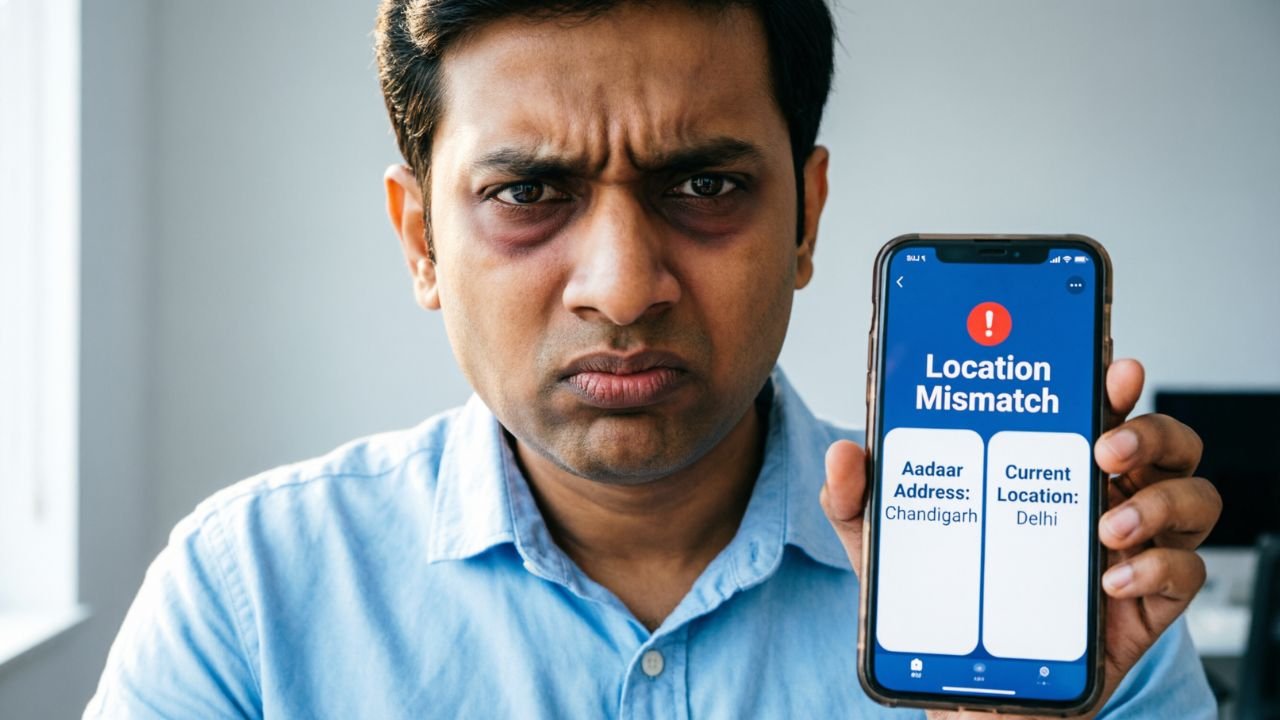
Major Challenge – KYC Location Issue: If your Aadhaar address differs from your current location, you may face KYC verification problems. You’ll need to visit a branch in your Aadhaar address location, which could lock your initial ₹5,000 if you can’t travel there immediately.
Verdict: Good account but only open if your current location matches Aadhaar address
6. Kotak Mahindra Bank: Best Overall Zero Balance Account
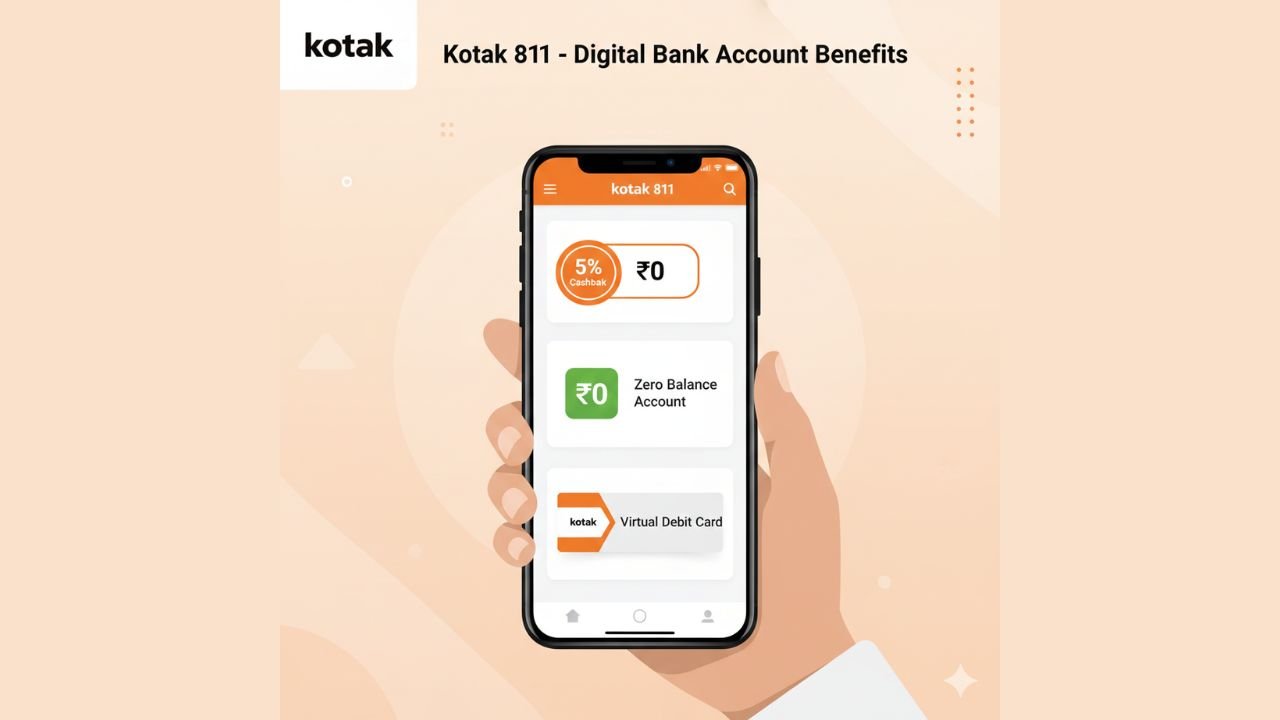
Kotak 811 stands out as the best zero balance savings account among private bank.
Kotak 811 Classic Account:
- Zero balance ✓
- Initial Funding: ₹2,000 (lowest among competitors)
- Debit Card Fee: ₹399 annually (including GST)
- Free fund transfers (NEFT, RTGS, IMPS, UPI)
- Virtual debit card provided
Kotak 811 Super Account:
- Zero balance ✓
- Initial Funding: ₹10,000
- Free Debit Card ✓
- Annual Fee: ₹399
- 5% Cashback on online transactions
- Maximum ₹500 cashback/month (₹6,000/year)
- Requires ₹10,000 monthly credit (salary/income)
Cash Transaction Charges:
- Classic: 1 free transaction/month OR ₹10,000 limit
- Super: 4 free transactions/month
- After free limit: ₹5 per ₹1,000 deposited/withdrawn
Example: Deposit ₹1 lakh after free limit = ₹500 charges
Advantages:
- ✅ Superior digital banking experience
- ✅ Low initial funding (Classic)
- ✅ Excellent mobile app
- ✅ 5% cashback (Super account)
- ✅ No MAB stress
Disadvantages:
- ❌ High cash transaction charges
- ❌ Not ideal for cash-intensive businesses
Verdict: BEST for salaried professionals and digital payment users
Government Banks: Reliable Zero Balance Options
1. State Bank of India (SBI): Best for Cash Transactions
SBI offers the Insta Plus Savings Account – a genuine zero balance account perfect for cash-heavy transactions.
Key Features:
- Zero balance ✓
- No initial funding required
- Debit Card: Free first year, ₹236/year from second year (₹200 + 18% GST)
- Cash Transactions: 3 free transactions/month
- After free limit: Flat ₹59 per transaction (₹50 + 18% GST)
- NO limit on transaction amount – deposit/withdraw ₹1 crore for just ₹59!
Comparison Example:
- Kotak: ₹1 lakh deposit = ₹500 charges
- SBI: ₹1 lakh deposit = ₹59 charges
- Savings: ₹441 per transaction!
Advantages:
- ✅ Best for cash deposits/withdrawals
- ✅ Massive branch network
- ✅ Trusted government bank
- ✅ YONO app for digital banking
- ✅ No location-based KYC issues
Disadvantages:
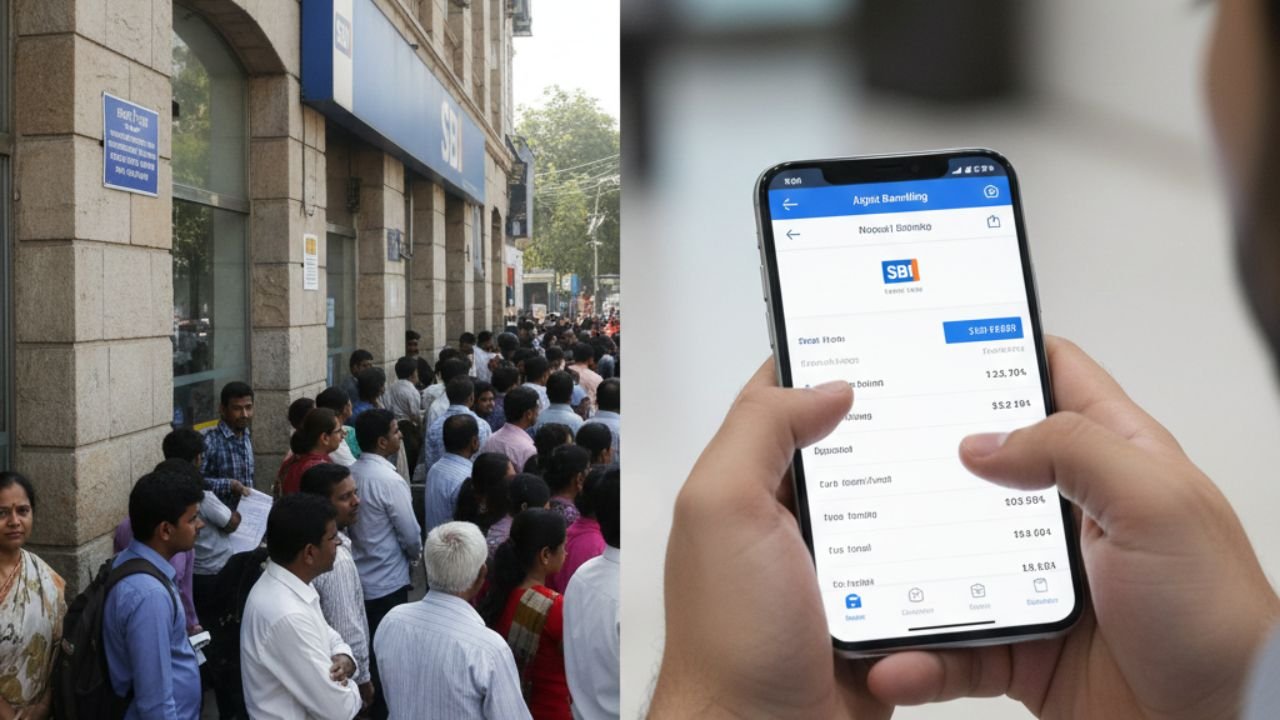
- ❌ Branch crowds and longer wait times
- ❌ Slightly dated digital experience vs private banks
- ❌ Higher debit card fees after first year
Verdict: BEST for shopkeepers, cash businesses, and low-income individuals
2. Bank of Baroda: Age-Restricted Zero Balance
Baroda Save Account:
- Zero balance for ages 18-25 years only
- Outside this age range: ₹3,000 MAB required
- Better mobile app than SBI
Verdict: Good for young adults, not suitable for others
3. Post Office: Traditional Banking
India Post Payments Bank (IPPB):
- Zero balance account
- Limited digital banking features
- Best for rural areas with poor bank access
- Government-backed security
Verdict: Only if no other bank branch nearby
Private vs Government Banks: Detailed Comparison
Cash Transaction Charges Comparison
|
Bank
|
Free Transactions
|
Charges After Limit
|
₹1 Lakh Deposit Cost
|
|---|---|---|---|
|
SBI
|
3/month
|
₹59 flat
|
₹59
|
|
Kotak Classic
|
1/month OR ₹10K
|
₹5/₹1,000
|
₹500
|
|
Kotak Super
|
4/month
|
₹5/₹1,000
|
₹500
|
|
HDFC
|
Limited
|
₹5/₹1,000
|
₹500
|
Digital Banking Experience
Private Banks Win:
- Kotak, ICICI, HDFC offer superior mobile apps
- Faster customer service
- Better UI/UX
- Advanced features
Government Banks:
- SBI YONO is improving
- More reliable for basic transactions
- Better for elderly/traditional users
Trust Factor
Government Banks:
- Perceived as safer (though all RBI-regulated banks are equally safe)
- DICGC insurance up to ₹5 lakh
- No risk of bank closure
Private Banks:
- Equally safe and regulated
- Better technology
- Higher efficiency

Who Should Choose Which Bank?
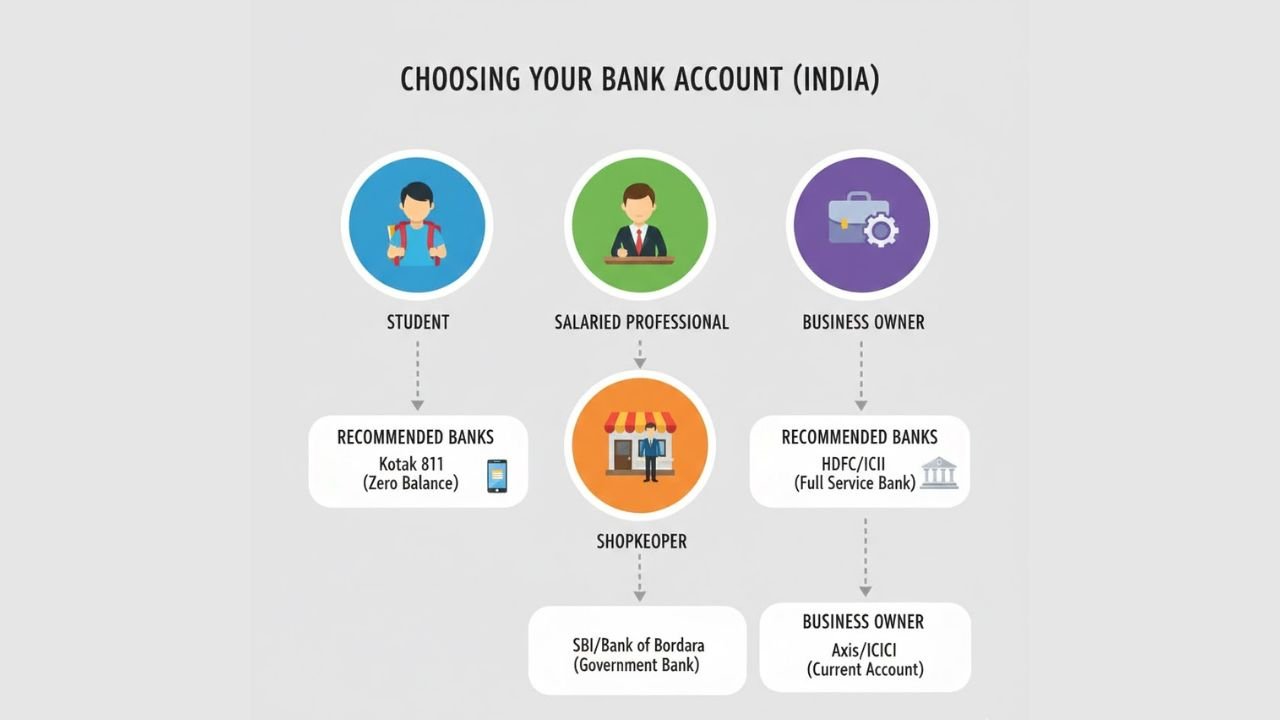
Choose Kotak Mahindra Bank (811) If:
✓ You’re a salaried professional (₹25,000+ monthly income) ✓ You primarily use digital payments (UPI, cards) ✓ You rarely visit bank branches ✓ You want 5% cashback on online spending ✓ You value excellent mobile banking
Choose SBI If:
✓ You run a cash-intensive business ✓ You need frequent cash deposits/withdrawals ✓ Your monthly income is below ₹20,000 ✓ You prefer government bank security ✓ You want minimal banking charges ✓ You’re uncomfortable with private banks
Choose AU Small Finance Bank If:
✓ You’re tech-savvy ✓ You want higher FD interest rates ✓ You’re comfortable with digital-only banking ✓ You can make ₹5,000-10,000 initial deposit
Avoid If:
✗ HDFC/ICICI: Unless you can maintain ₹10,000-15,000 MAB ✗ Axis Amaze: ₹200/month fee defeats zero balance purpose ✗ IndusInd: If your location differs from Aadhaar address
Account Opening Process: What You Need
Documents Required:
- PAN Card (mandatory)
- Aadhaar Card (for KYC)
- Passport-size photograph
- Address proof (if different from Aadhaar)
- Mobile number (linked to Aadhaar)
Online Account Opening Steps:
Step 1: Visit bank’s website or download app Step 2: Fill application form with personal details Step 3: Upload PAN and Aadhaar Step 4: Complete video KYC (for most private banks) Step 5: Make initial funding (if required) Step 6: Receive account details instantly Step 7: Debit card delivered in 7-10 working days
Important Note: For IndusInd Bank, ensure your current location matches Aadhaar address to avoid KYC complications.
Hidden Charges to Watch Out For
Even with zero balance accounts, be aware of these potential charges:
Common Charges:
- SMS Alerts: ₹15-30/quarter (opt for email alerts – free)
- Debit Card Annual Fee: ₹200-500/year
- Cash Transaction Charges: After free limit
- Demand Draft Charges: ₹50-500 based on amount
- Cheque Book: Usually free, but some banks charge
- ATM Charges: After 3-5 free transactions/month at other bank ATMs
How to Avoid Charges:
- Use UPI for transfers (always free)
- Opt for e-statements instead of SMS
- Use your bank’s ATMs
- Maintain digital transactions
Final Verdict: Our Top Recommendations
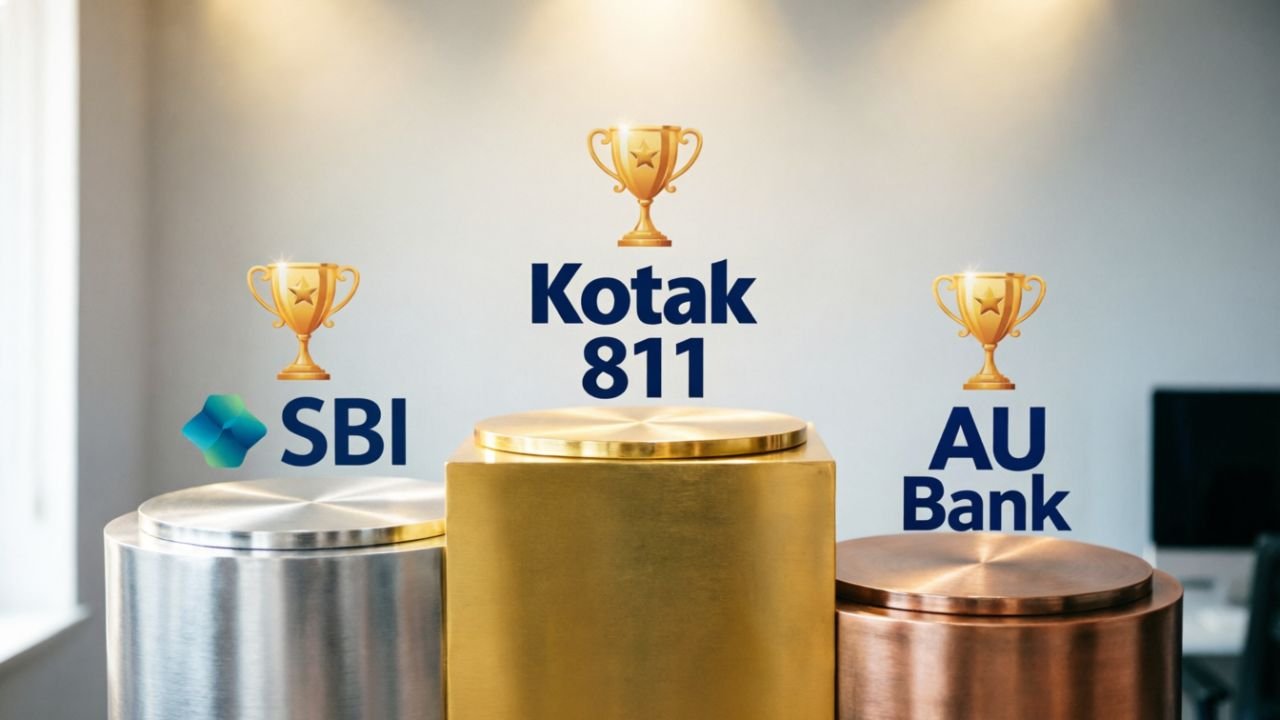
01. Best Overall: Kotak 811 Classic
Perfect balance of features, low initial funding (₹2,000), and excellent digital banking.
02. Best for Cash Transactions: SBI Insta Plus
Unbeatable for frequent cash deposits/withdrawals with just ₹59 per transaction after free limit.
03. Best for Young Professionals: Kotak 811 Super
5% cashback can earn you ₹6,000/year – perfect if you spend online regularly.
Best for Students: AU Digital Savings
Zero balance with higher interest rates, ideal for students receiving allowances.
Frequently Asked Questions (FAQs)
Q1: Is zero balance account really free?
A: Yes, there’s no penalty for maintaining zero balance. However, you may pay for debit cards, SMS alerts, and cash transactions after free limits.
Q2: Can I open multiple zero balance accounts?
A: Yes, you can open accounts in multiple banks. However, maintain only 1-2 active accounts to avoid confusion.
Q3: Are zero balance accounts safe?
A: Absolutely! All RBI-regulated banks (private and government) are equally safe. Deposits are insured up to ₹5 lakh by DICGC.
Q4: Can I convert my existing account to zero balance?
A: Some banks allow conversion. Contact your branch or check the mobile app for this option.
Q5: Which bank offers instant account opening?
A: Kotak 811, AU Bank, and SBI Insta Plus offer instant digital account opening with video KYC.
Conclusion: Make the Right Choice
Choosing the best zero balance savings account depends on your specific needs:
- Digital-first users with regular income → Kotak 811
- Cash-heavy businesses → SBI
- Students and young adults → AU Small Finance Bank
- Traditional banking preference → SBI or Post Office
Remember, the best account is one that aligns with your transaction patterns, income level, and banking preferences. Don’t fall for marketing gimmicks – read the fine print about initial funding, cash transaction charges, and debit card fees before making your decision.
Ready to open your zero balance account? Start with Kotak 811 or SBI Insta Plus for the best combination of features, convenience, and cost-effectiveness in 2026!
Disclaimer: Bank charges and features are subject to change. Always verify current rates and terms on the official bank website before opening an account. This article is for informational purposes only and does not constitute financial advice.









Leave a Comment